
Strain, Temperature, and Humidity Mechanisms
The same Bragg wavelength can respond to multiple physical causes. This page explains those mechanisms and why compensation is essential.
Strain, Temperature & Humidity Mechanisms
The same Bragg wavelength shift can result from strain, temperature, or humidity changes — or a combination of all three.
Mechanism — The Response Formula
The general response formula:
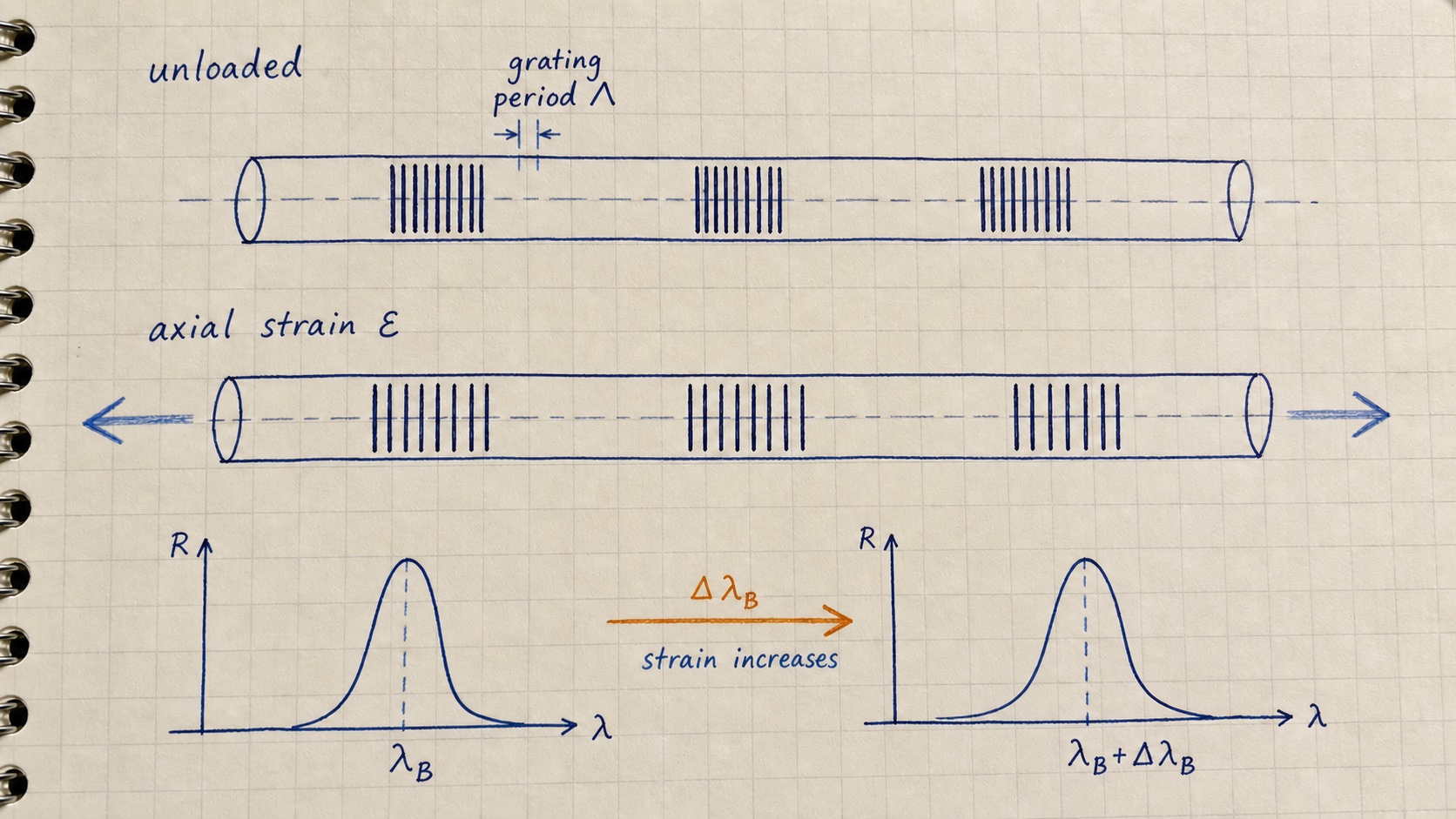
Physical Process
- Strain: elastic elongation, photoelastic effect
- Temperature: thermal expansion, thermo-optic effect
- Humidity: coating absorption, moisture expansion
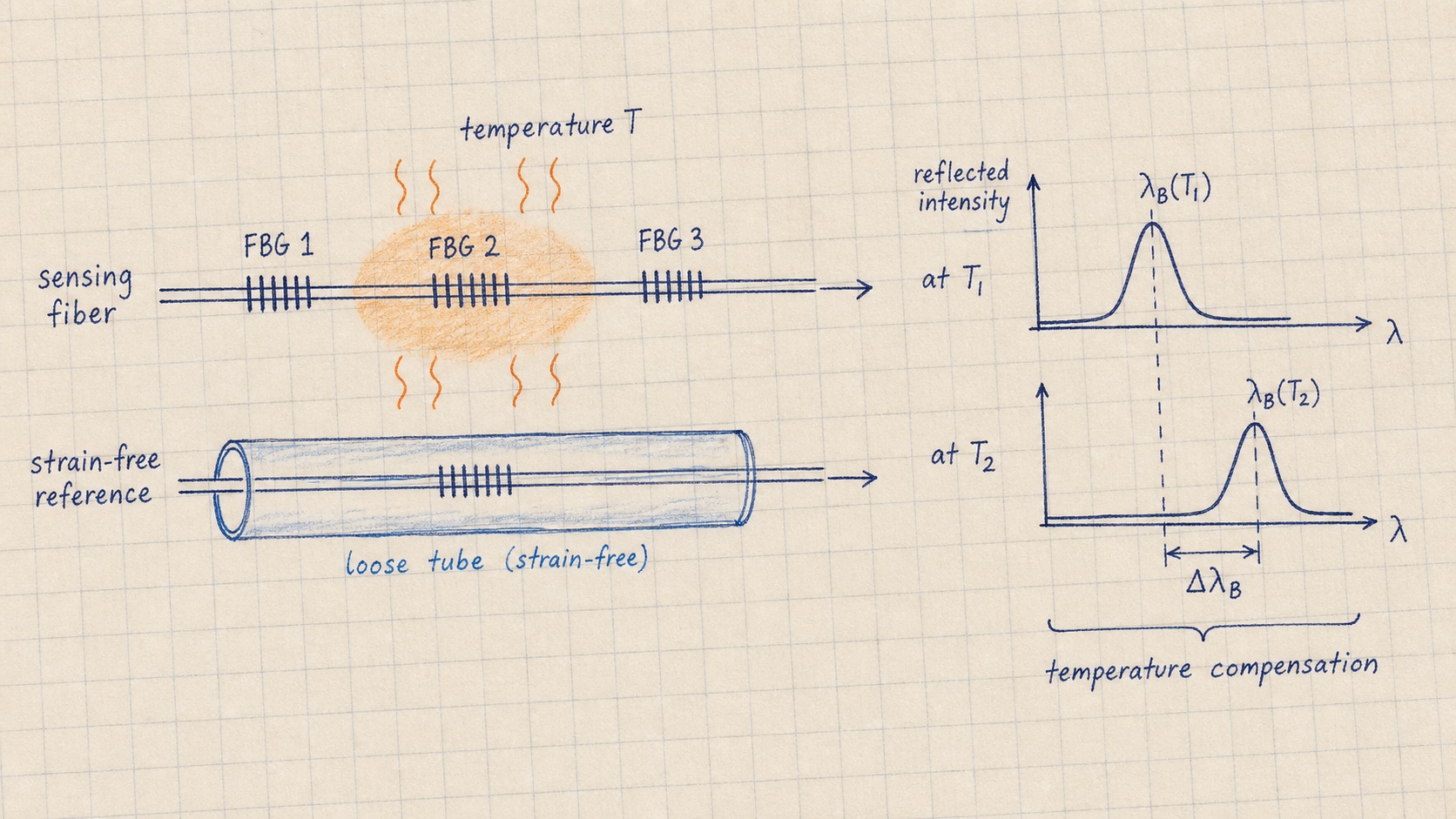
System Behavior — Cross-Sensitivity
Cross-sensitivity means a clean signal can still represent the wrong physical quantity without proper compensation or decoupling. This is why cross-sensitivity is such an important engineering issue. A signal may look clean, but still represent the wrong physical quantity if the design does not isolate or compensate the other effects.
Engineering Meaning
- Coating selection affects humidity response
- Packaging design determines strain isolation
- Compensation algorithms improve accuracy
Proper coating selection and structural design can significantly alter the effective temperature and humidity coefficients, making cross-sensitivity compensation essential for accurate measurement. RaySensing's UW-FBG sensors and specialized sensing cables incorporate these design considerations to ensure measurement accuracy across diverse deployment environments — from bridge monitoring to downhole oil and gas applications.
Mechanism Logic
This simple statement captures the core challenge of cross-sensitivity in FBG sensing. Without proper design and compensation, a measured wavelength shift could be misinterpreted — for example, temperature drift being read as strain. Engineering solutions address this through coating selection, structural packaging, and algorithmic decoupling in the DSS/DTS analyzers that process the raw optical signals.

From controlled optical interactions to field measurements.
The principles described in this chapter are examined through grating fabrication, optical interrogation experiments, sensing-cable characterization, and field validation. Each stage tests a different part of the sensing chain.
- 01FabricateControl the optical structure.
- 02MeasureObserve the signal response.
- 03ValidateTest the complete sensing chain.
Related Products
Explore our product portfolio for complete sensing solutions
Ready to Build Your Sensing System?
Talk to our engineers to design a UW-FBG sensing solution tailored to your application.
Talk to an Engineer