
Cable Temperature Profile
Continuous temperature along full cable route with ±0.5°C accuracy
Monitoring solution
Real-time distributed temperature, acoustic intrusion, partial discharge, and strain monitoring for power transmission cables, utility corridors, and grid infrastructure — detect faults before they become outages.
The engineering question
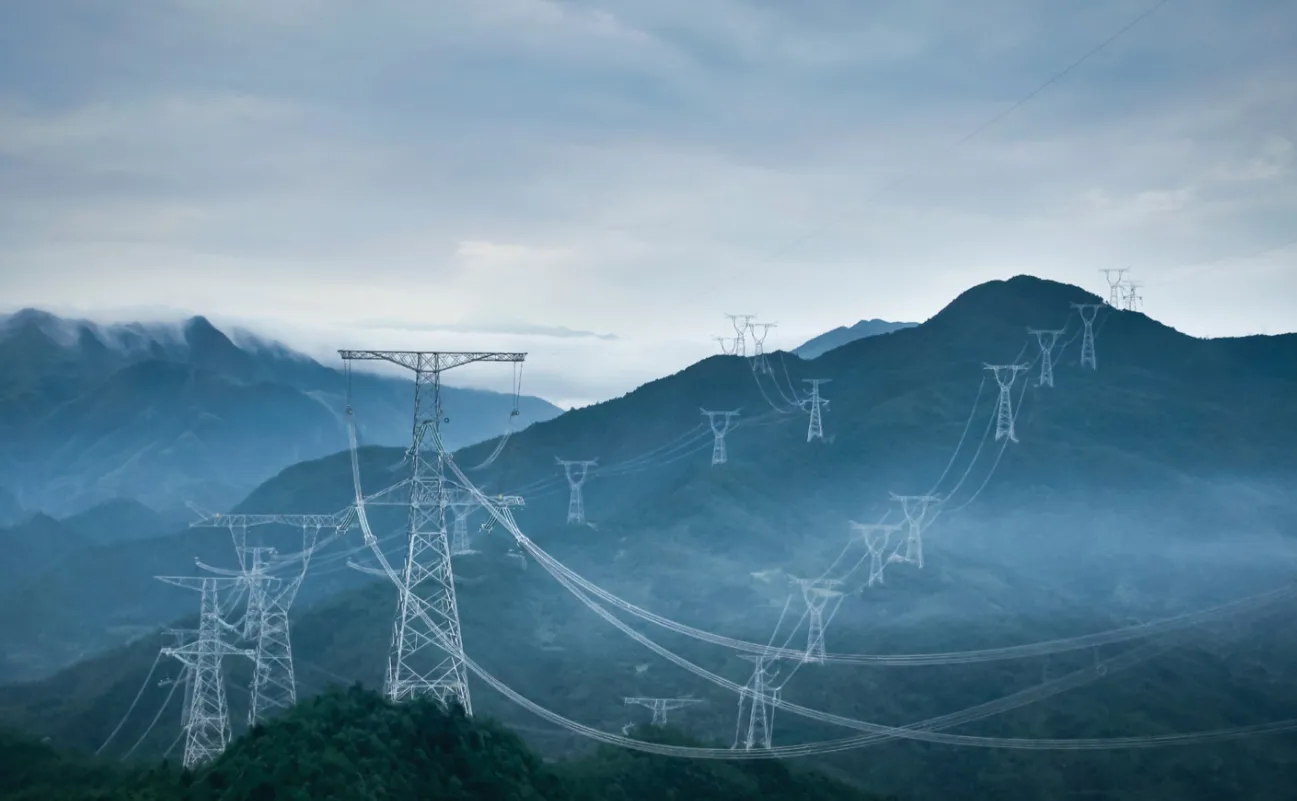
Utility corridors and power transmission cables carry the backbone of modern energy infrastructure, yet they face constant threats: thermal overload from variable load demands, mechanical strain from ground settlement and construction activity, third-party excavation damage, and progressive insulation degradation through partial discharge. A single undetected fault can cascade into widespread outages, equipment damage, and millions in lost revenue and emergency repair costs.
Traditional monitoring methods — periodic infrared thermography, manual patrol inspections, and sparse point-based temperature sensors — cannot catch dynamic thermal transients, localize partial discharge events, or detect intrusion in real time. The industry demands a continuous, distributed monitoring solution that simultaneously tracks cable temperature, mechanical integrity, acoustic signatures, and external intrusion across the entire asset — without the coverage gaps of point sensors or the vulnerabilities of electrical sensing systems.
Monitoring boundary
Continuous temperature along full cable route with ±0.5°C accuracy
Sub-με strain detection on cable sheathing and support structures
Real-time detection and localization within 10 m
Acoustic signature monitoring for insulation degradation
Sub-mm displacement monitoring along cable trench
Real-time cable rating based on actual thermal conditions
Power cable monitoring design
Use DTS to assess temperature along the monitored cable route. Review DSS where strain or deformation is the measurement objective, and DAS where vibration or acoustic events are relevant. These measurements answer different questions; a temperature profile does not directly measure mechanical damage.
For selection, provide the route length, cable arrangement, joint and termination locations, available sensing fiber, installation access and required response time. Define how the fiber couples to the cable or surrounding structure, and validate the interpretation against representative operating conditions.
Sensing chain
Field placement
UW-DTS sensing fiber deployed alongside or embedded in power cable ducts (up to 40 km per channel)
UW-FBG strain sensing cables attached to cable sheaths at critical spans and joint locations
uwDAS fiber buried 30-50 cm above cable trench for third-party intrusion detection
RS-DTS/DAS multi-channel interrogator at substation or junction tower
Dynamic line rating integration with SCADA/DMS for real-time ampacity management
Automated SMS/email alerts for temperature threshold exceedance and intrusion events
CCTV integration module for video-linked alarm verification at intrusion locations
Ray-Sensor cloud platform with GIS mapping and historical trend analysis
Engineering record
Field evidence
Define the monitoring boundary
These inputs determine the sensing layout more reliably than choosing an instrument first.