
How Ultra-Weak FBG Arrays Support Pile Static Load Testing and Internal Force Analysis
Abstract
In static load testing of large-diameter bored piles, conventional point sensors are often insufficient to describe the full-depth strain field and load-transfer behavior of the pile shaft. Ultra-weak fiber Bragg grating (UW-FBG) arrays provide high-density strain measurements along the pile, enabling further calculation of axial force, side friction, end resistance, bending moment and shear force.
Based on the Fujian Wanhua Chemical test pile project, this article explains the measurement principle, analysis workflow, representative findings and practical limitations of using UW-FBG arrays in vertical and horizontal static load tests.
1. Why Continuous Strain Data Matters in Pile Testing
The quality of a pile directly affects its vertical and horizontal bearing capacity. Large-diameter bored piles may face construction risks such as pile breakage, hole enlargement and displacement, while conventional point sensors can be difficult to install, have limited survival rate, be affected by electromagnetic interference, and fail to provide distributed measurements along the pile shaft.
From an engineering-analysis perspective, vertical load transfer is not a point phenomenon. Load is gradually transferred from the pile head to the surrounding soil and pile toe through side friction and end resistance. Under horizontal loading, bending moment and shear force are also strongly depth-dependent. Therefore, full-depth strain information is valuable for interpreting pile performance beyond the top-load versus settlement curve.
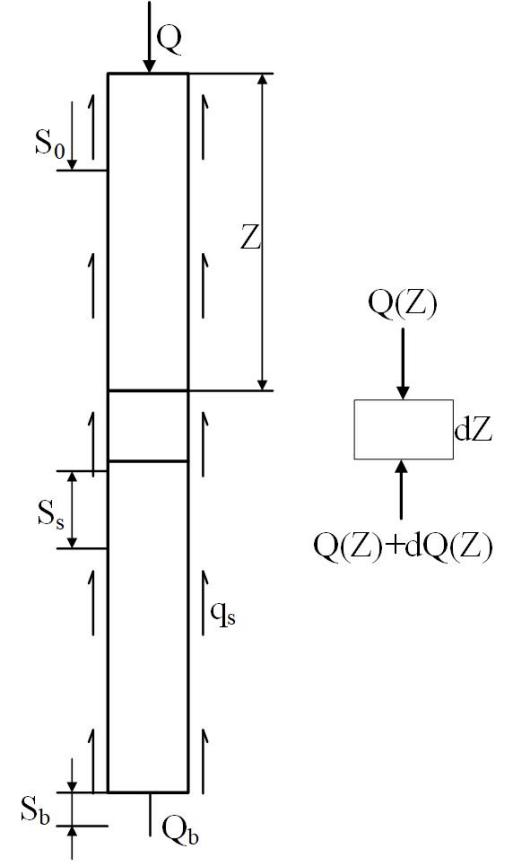
Figure 1. Pile load-transfer schematic. The source document uses this diagram to explain how vertical load is gradually balanced by side friction and pile-end resistance.
2. Measurement Logic of UW-FBG Arrays
Ultra-weak FBGs are generally defined as fiber Bragg gratings with reflectivity lower than 0.1%. Because each grating reflects only a small amount of optical energy, its influence on downstream gratings can be neglected, allowing a very large number of sensing points to be multiplexed in a single optical fiber. The center wavelength of the reflected light shifts when axial strain or temperature changes alter the effective refractive index and grating period.
In the reported project, UW-FBG arrays were used to obtain distributed strain along the pile shaft with approximately one-meter data intervals, from which pile axial force, side friction and end resistance were calculated. The key role of the technology is not to replace the static load test, but to enrich it with internal-force interpretation.
3. From Strain to Internal Force in Vertical Static Load Testing
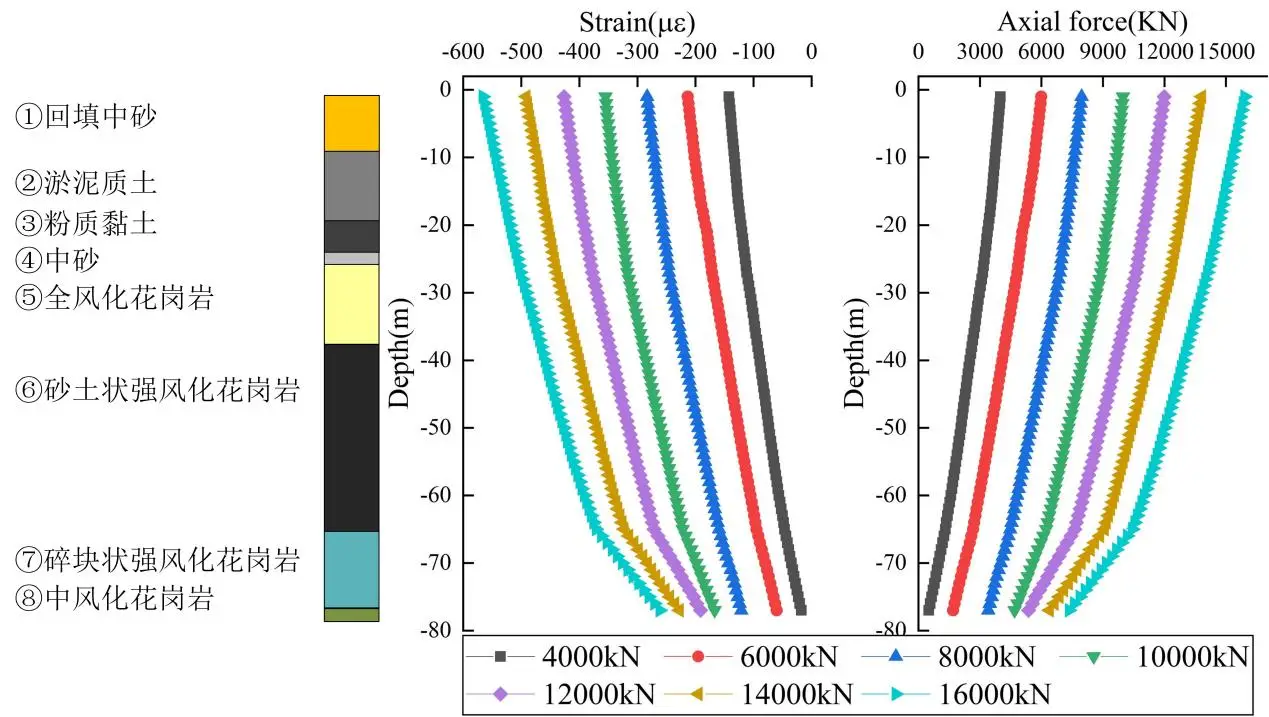
The source document analyzes vertical static load tests on trial piles S1 and S3. In the reported test stages, side friction was relatively small, while the pile-end bearing layer played a major role. The maximum reported end-resistance contribution was 49.45% for S1 and 46.95% for S3. These findings illustrate how UW-FBG data can move the interpretation from a global pile-head response to a full-depth load-transfer mechanism.
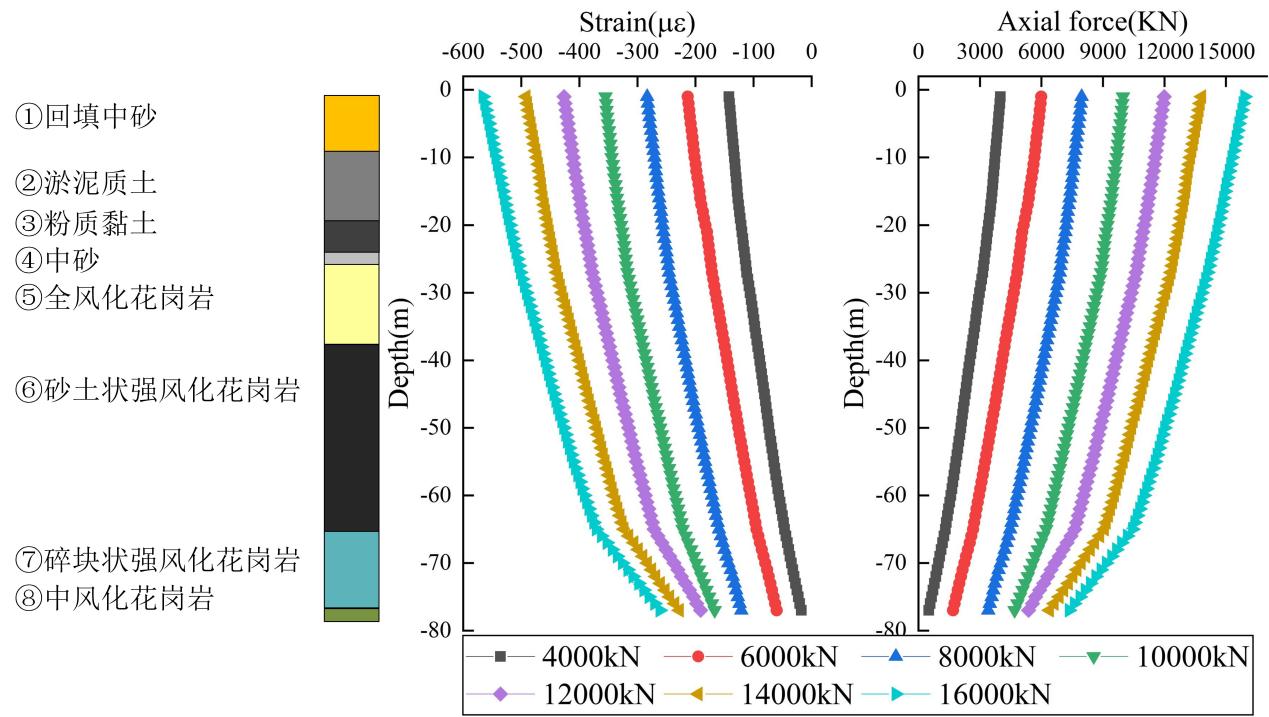
Figure 2. Strain and axial-force distributions of trial pile S3 under vertical static loading. The figure illustrates how strain and axial force vary with depth and load level.
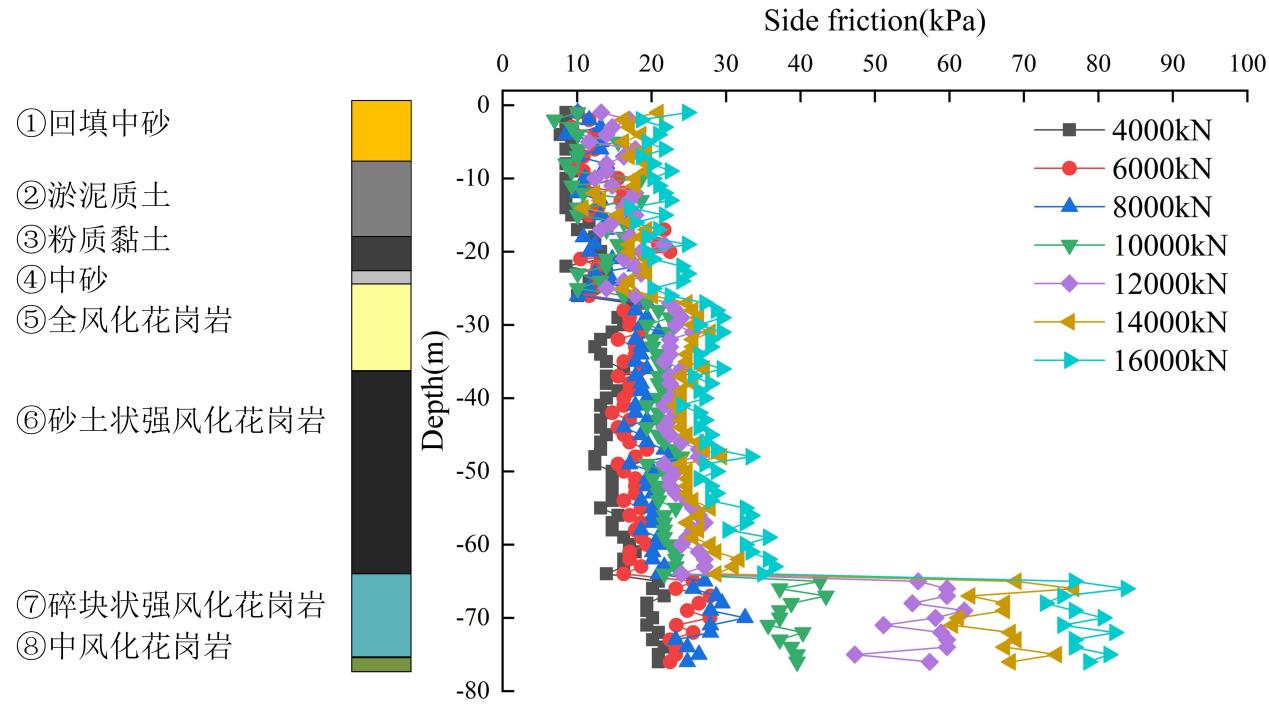
Figure 3. Side-friction distribution of trial pile S3 under vertical static loading. The source document uses such results to assess the contribution of different soil layers.
4. Horizontal Static Load Testing: Bending Moment and Shear Force
Under horizontal loading, one side of the pile is in compression while the opposite side is in tension. Strain data from symmetric sensing positions along the loading direction are used to calculate bending strain, then derive bending moment and shear force distributions along the pile shaft.
The horizontal static load test was conducted from 320 kN to 1,600 kN in 160 kN increments. Results show that bending moment was mainly concentrated within approximately the upper 10 m of S1 and the upper 9 m of S3. The maximum bending-moment section was located approximately 2 m below the pile head — providing useful information for identifying the critical depth range under lateral loading.
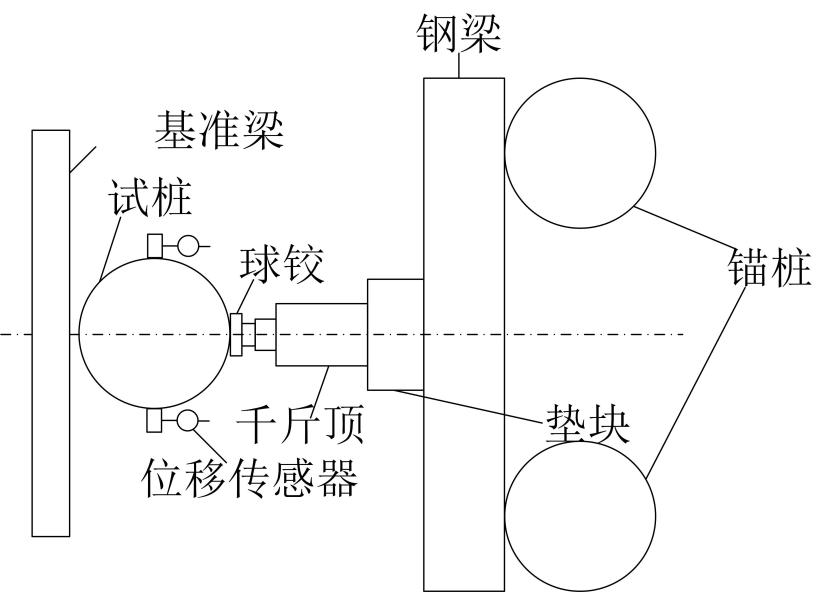
Figure 4. Single-pile horizontal static load test arrangement. The diagram indicates the loading method and relative position of sensors.
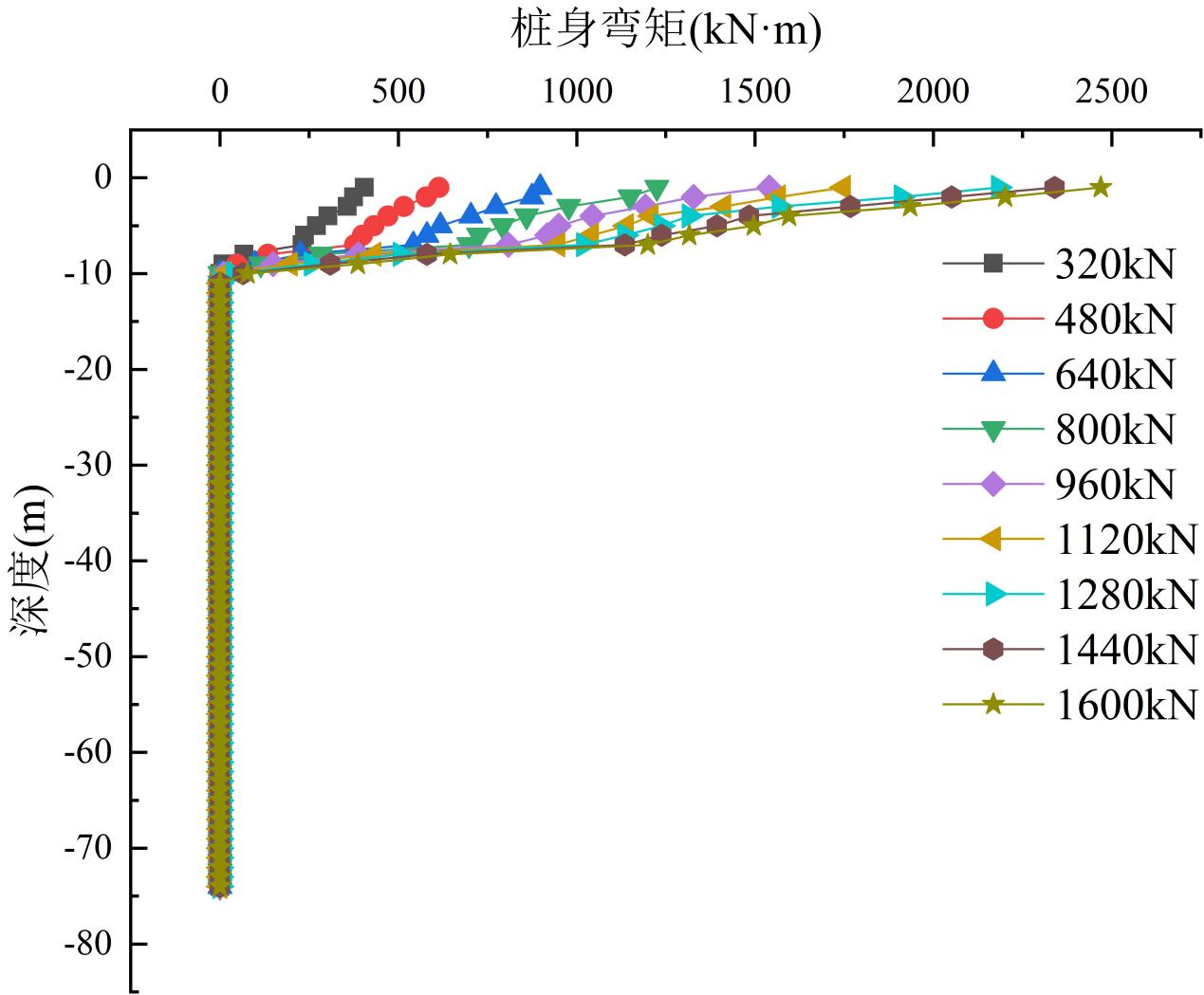
Figure 5. Bending-moment distribution of trial pile S1 under horizontal static loading. The source document shows that bending response is concentrated near the shallow part of the pile.
5. Engineering Value and Practical Limitations
- Continuous internal-force interpretation: UW-FBG arrays provide a more spatially complete view of strain and axial-force distribution than isolated point measurements.
- Design verification support: Axial force, side friction and end resistance analysis can help determine whether pile capacity is mainly mobilized by the shaft or the pile toe.
- Horizontal-load assessment: Bending moment and shear-force distributions help identify the critical depth range under lateral loading.
- Practical limitations: Interpretation depends on cable survival, bonding and coupling quality, temperature compensation, installation workmanship and the mechanical parameters used in calculation. Results should be interpreted together with static load data, geological information and structural calculations.
6. Conclusion
The Fujian Wanhua Chemical test pile material demonstrates that UW-FBG arrays can be used to support internal-force analysis in vertical and horizontal static load testing of large-diameter bored piles. For vertical testing, the method provides strain, axial-force, side-friction and end-resistance distributions. For horizontal testing, it supports bending-moment and shear-force interpretation along depth. Its value lies in extending static load testing from a global bearing-capacity assessment to a mechanism-level understanding of pile behavior.
Need Help With Your Application?
Talk to our engineers about how UW-FBG technology can solve your specific sensing challenges.